Glamping looks affordable until the bill arrives. The nightly rate seems reasonable, then add-ons like firewood and kayak rentals creep in, plus food, fuel and fees, and suddenly a simple weekend in a tent costs as much as a hotel stay. If you want a budget-friendly glamping trip, the trick is planning the money side before you fall in love with a listing.
This guide walks you through the whole process: setting a realistic budget before you browse, picking dates that lower the nightly rate, choosing a stay type that fits your wallet, keeping travel costs down with a short drive, packing smart so you skip pricey on-site extras, and spotting hidden fees before you book. Follow these steps and you can enjoy the fresh air, the comfy bed and the campfire without the overspend.
Set a Realistic Glamping Budget Before You Browse
The biggest budgeting mistake in glamping is browsing first and doing the math later. You see a gorgeous safari tent, mentally commit, and then reverse-engineer a budget around it. Flip that order: decide on a total ceiling before you open a single listing. For most couples, a budget-friendly glamping trip works out to around $400-600 for two people covering two nights, food and fuel. That number is your hard ceiling, not a suggestion.
Split your ceiling into three buckets
Divide that total into three buckets: the nightly rate, food and drinks, and transport or activities. If your ceiling is $500 for two nights, that might mean roughly $250 for the stay, $150 for meals and snacks, and $100 for fuel and one paid activity. Writing the buckets down keeps you honest when a listing tempts you toward a pricier option.
Know what a normal rate looks like. In the US, glamping typically runs about $100-300 per night depending on the structure and location. Treat anything above that range as a splurge you consciously choose, not as the baseline you have to match.
Finally, add a 10-15% buffer for the extras that almost always show up: firewood bundles, kayak rentals, late checkout or a s’mores kit at check-in. If your ceiling is $500, plan for $550 total and you will never be surprised at checkout.
Pick Dates That Cut the Nightly Rate
Dates move the nightly rate more than almost anything else you control. The same yurt on the same property can swing wildly in price depending on the night you book, so timing is your cheapest discount. Two patterns matter most: the season and the day of the week. Get both right and you can stay in a nicer unit for less than you would pay for a basic tent in peak season.
Shoulder seasons are the sweet spot. Aim for May, late September and October, when rates often drop 20-40% below peak summer pricing. You also get quieter grounds, easier booking and weather that is often pleasant for campfires and hiking. Midweek stays stack on top of that: booking Tuesday through Thursday nights commonly saves 15-30% compared with weekend pricing, so a Tuesday-Wednesday trip in October can cost a fraction of a Saturday night in July. Combine the two and even a splurge-worthy safari tent can slide into a modest budget.
- Watch the weather trade-off: shoulder-season nights can get chilly, so a unit with a wood stove or good insulation is worth prioritizing if you are booking outside summer.
- Check local events before you commit: a festival, leaf-peeping weekend or holiday near your destination can push shoulder-season prices back up, so scan the local calendar for your dates.
- Book peak weekends far ahead: for summer Friday-Saturday stays, reserve 2-3 months in advance, because the cheapest units usually sell out first and you end up paying for pricier structures left over.
- Ask about minimum-stay rules: some sites require two-night minimums on weekends, which can make a midweek one-nighter the better deal if your schedule allows it.
Choose a Stay Type That Matches Your Budget
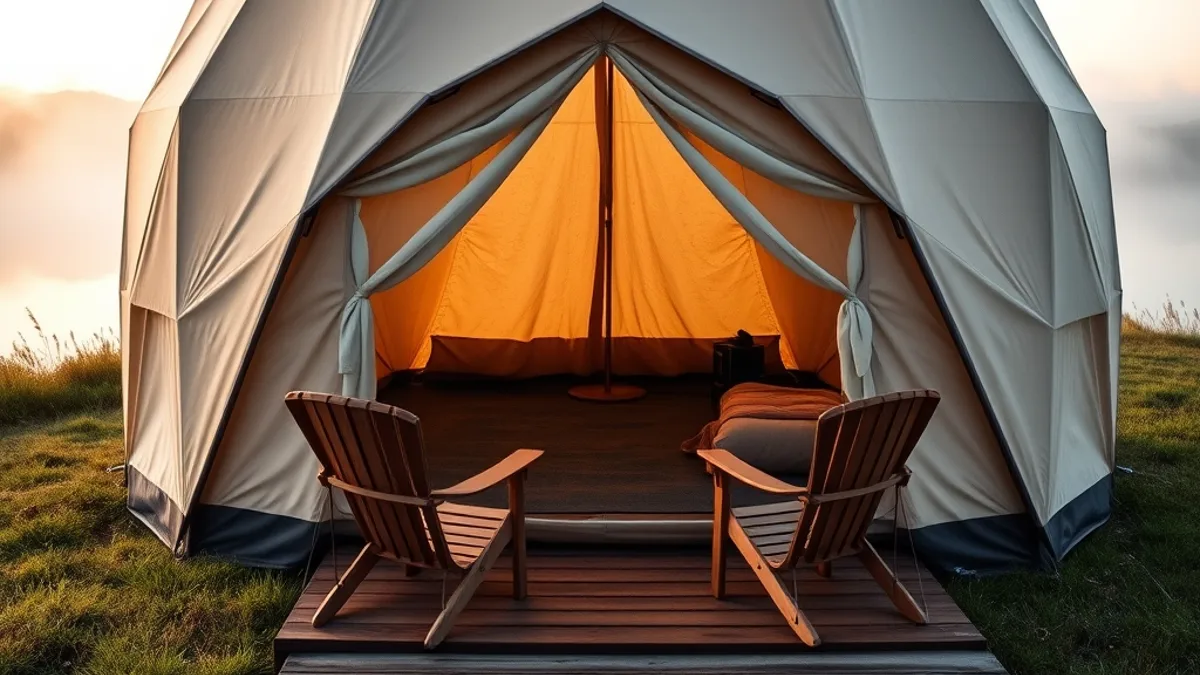
Not all glamping is priced the same, and the structure you choose is the single biggest lever on your nightly rate. Tent cabins and yurts sit at the simple end of the scale, while safari tents and geodesic domes usually cost more for the same nights and location. If your goal is a budget-friendly glamping trip, start with the simpler structures and see whether they check your boxes before you pay up for a dome with a skylight.
The priciest hidden upgrade is often the private bathroom. Off-grid tents without ensuite facilities typically run $50-100 less per night than cabins with private baths. Over two nights, that is real money, and most shared bathhouses are clean, close by and perfectly fine for a weekend.
Instead of paying for every feature, pick the one luxury that actually matters to you and sacrifice the rest. If mornings are cold where you are going, a wood stove beats an ensuite bath. If you hate walking to the bathroom at night, flip that priority. One real comfort makes the trip feel special; five of them make it expensive.
- Look for kitchen access: a shared kitchenette or even a covered cooking area lets you prepare breakfast and dinner on site instead of budgeting for restaurant meals every day.
- A dedicated fire pit counts as a kitchen: sites that allow campfire cooking make simple foil-packet and one-pot dinners easy, which keeps your food bucket intact.
- Check what “off-grid” really means: some budget units have no lighting or outlets at all, which is fine if you pack headlamps and a power bank, but worth knowing before you book.
- Compare structure size to your group: a two-person tent cabin is a bargain for a couple, but adding kids may push you toward a larger yurt anyway, so price per person rather than per night.
Keep Travel Costs Low With a Short Radius
The fastest way to blow a glamping budget is not the nightly rate — it is the drive. Once you start browsing listings three or four hours away, fuel, tolls and a long day of travel quietly eat the money you saved on a cheaper tent. Sticking to a 2-3 hour drive radius of home keeps fuel costs low for a weekend trip, which leaves more of the budget for the stay itself and less for the road.
Run the full math, not just the sticker price
A lower nightly rate can be an illusion once distance enters the picture. A site two hours closer can easily beat a slightly cheaper one that adds a full tank of gas each way, plus extra hours on the road and a pricier dinner stop. Before you book, add up fuel for the round trip, any tolls, and the value of your time. The “cheaper” option often wins on paper and loses in real life, especially when the closer site also lets you skip a restaurant meal on the way in.
Also check how the site handles parking. Some glamping properties include a spot with your booking, while others charge per vehicle per night, and a few count a second car or a boat trailer as an extra. If you are carpooling in one vehicle, you avoid that fee entirely — another reason a nearby site with easy access usually fits a tight budget better than a distant bargain.
One more distance trick: a shorter radius makes a last-minute swap easier if weather turns or a site cancels. You can pivot to a backup option nearby without losing a whole tank of gas, which is exactly the kind of flexibility a tight budget needs.
Pack Smart to Avoid Paying for Extras On Site
Glamping sites make a surprising amount of money on the extras. Renting bedding, a lantern or a cooler on arrival can cost several times what the same items would cost you to bring from home, and those small charges add up fast over two nights. The fix is simple: pack as if you were camping, and let the fancy tent be the luxury.
Food is the other quiet budget killer. A nearby restaurant dinner for two can cost as much as one more night of your trip, so plan to self-cater. A camp stove or a simple one-pot meal plan can cut your food costs roughly in half compared with eating out, and cooking over a fire pit is half the fun anyway.
Before you buy anything, though, confirm what the site already provides. Many tent cabins and yurts come stocked with towels, basic cooking gear or coffee equipment, and duplicating those purchases wastes money and trunk space. A quick message to the host or a careful read of the listing saves both.
- Bedding layers: even in summer, nights can turn cold — pack a sleeping bag plus a fleece liner instead of paying for a “linen package” add-on at checkout.
- Headlamps: one per person, with spare batteries, since many glamping sites are off-grid and paths between tents are unlit after dark.
- A hard-sided cooler: stocked with ice and two days of food so you are not making a pricey run to the nearest small-town grocery for overpriced basics.
- A single pot, pan and spork set: enough for one-pot dinners and morning coffee without hauling your full kitchen, especially if the site has no cooking gear.
Spot Hidden Fees Before You Book a Budget-Friendly Glamping Trip
The nightly rate you see in search results is rarely the rate you pay. Cleaning fees, service fees and pet fees can add 20-30% on top of the nightly rate, which turns a bargain tent into a mid-range one by checkout. Before you confirm, expand the full price breakdown and read every line — that total, not the headline rate, is what your budget has to cover.
Compare totals, not listings
The same tent is often listed on several platforms at different final prices, because each one layers on its own service fee. Put in your exact dates and compare the total across at least three platforms, plus direct booking on the site’s own page if there is one. Direct bookings sometimes skip platform fees entirely, which is the easiest discount you will ever find. This same discipline of comparing true totals before committing applies to plenty of money decisions — it is the same habit behind questions like what to ask a lender before refinancing your home loan: look past the headline number at the full cost.
Finally, read the cancellation terms before you pay. Flexible rates sometimes cost more upfront, but if weather turns bad or plans shift, that flexibility can save the entire cost of the trip. A cheaper strict-cancellation booking is only a bargain if nothing goes wrong — and on a camping trip, something occasionally does.
The Budget Glamping Takeaway
Glamping looks affordable at first glance, but the nightly rate, add-ons and travel costs pile up fast. The fix is planning your trade-offs before you book, not after the bill arrives. Set a fixed ceiling of around $400-600 for two people, aim for shoulder-season or midweek dates, and choose a simpler stay type like a tent or yurt instead of a full luxury dome.
The rest follows naturally: keep your drive within a 2-3 hour radius, self-cater with easy one-pot meals, and read the full fee breakdown before you click book. Do that, and you keep the wood stove, the starry sky and the comfortable bed, just without the overspend. If this helped you plan your trip, leave a comment or share this article with a friend.