You want a weekend in the woods with a real bed, a roof over your head and maybe a wood stove crackling at night. Then you start browsing listings and find yourself stuck: one glamping style costs $90 a night in a canvas tent, while a glass-domed suite on the same property asks $400. Which one is right for your trip?
The answer depends on more than looks. Your glamping style determines how warm, dry and comfortable you’ll be, how much you’ll pay and how far your budget stretches. In this guide, we’ll break down what each structure type actually is, compare typical price ranges, show you how to match a style to the season, and cover the comfort features, budgets and booking windows that make the biggest difference. By the end, you’ll know exactly which structure fits your trip before you click “reserve.”
What Glamping Style Actually Means
When people say glamping style, they’re talking about the structure you sleep in, not the location or the décor. The main types you’ll see on booking platforms are safari tents, yurts, geodesic domes, treehouses, small cabins and A-frames. Each one is a genuinely different product with different materials, insulation and layout.
Why the structure matters more than the destination
Style determines your comfort level, your weather resistance and your price far more than the destination does. A lakeside safari tent in July can be lovely, but the same canvas walls in a September rainstorm will feel flimsy. Meanwhile, an insulated yurt in a less famous spot might give you a warmer, quieter night than a trendy dome somewhere scenic.
The price gap shows up on single properties, too. It’s common to find a $120 yurt and a $400 dome sitting side by side on the same site, sharing the same view and the same fire pit. What you’re paying for is the structure: insulation, private bathrooms, heating and space. Once you understand that the style itself drives the experience, choosing becomes much simpler. Start by deciding what conditions you’ll face and how much comfort you need, then pick the structure that matches.
Compare the Main Glamping Styles and Their Price Ranges
The four main glamping styles fall into clear price tiers, and each has a distinct personality. Knowing what you get at each level helps you spend where it counts, because the differences go well beyond looks. Structure type drives comfort, weather resistance and how many people you can bring along, so it pays to match the style to your trip before you fall in love with a photo.
- Safari tents ($90–$150 per night): Canvas walls with real beds and furniture inside. They feel closest to classic camping with a serious comfort upgrade, and they perform best in dry summer weather when you can leave the flaps open to the breeze.
- Yurts ($110–$180 per night): Round structures with insulated walls that usually sleep 2–4 guests. The circular layout feels surprisingly spacious, and the solid construction handles wind noticeably better than a canvas tent.
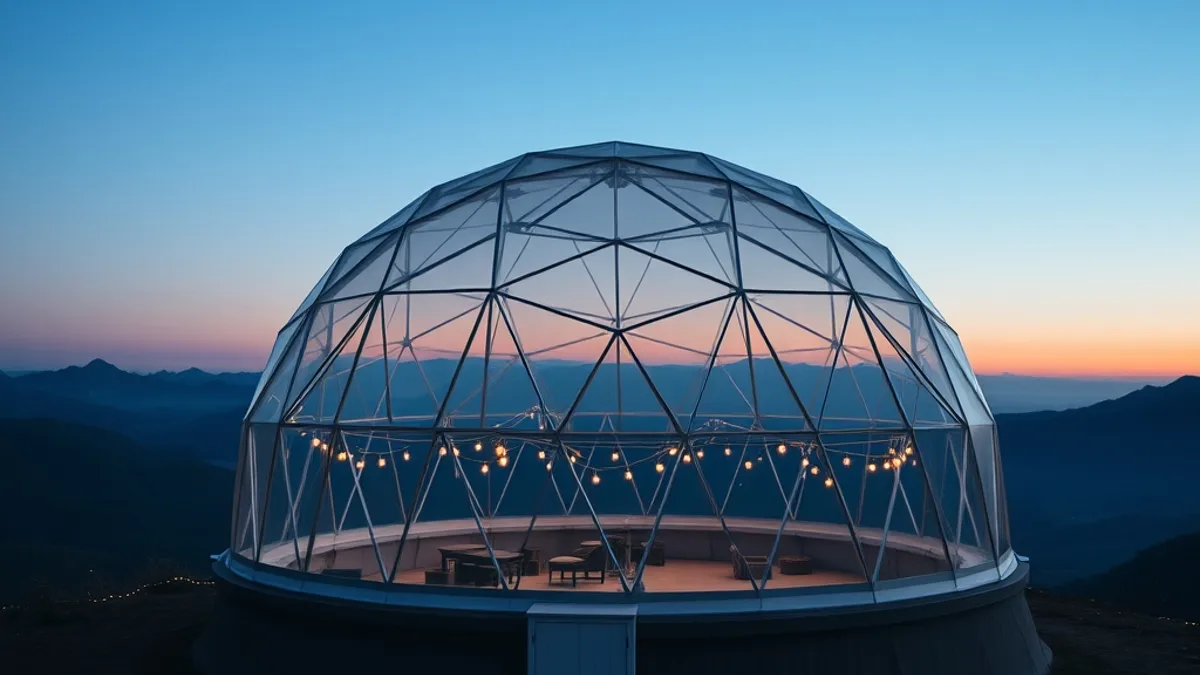
- Geodesic domes and treehouses ($250–$450 per night): The premium tier. These usually come with private bathrooms, better heating and statement views through large windows or glass fronts, which is why they photograph so well.
- Small cabins and A-frames ($150–$250 per night): The most weather-proof option, typically sleeping 4–6. Real walls, real doors and full climate control make them the safest bet outside of high summer.
A useful way to think about these tiers: the budget options trade weather protection for price, while the premium options buy you insulation and privacy. That trade-off matters most in the shoulder months, when a canvas tent that felt charming in July can turn damp and chilly overnight. Cabins sit in the middle and often work out best per person for groups, since one unit can hold a whole family without booking two separate structures. They also tend to sit closer to the property’s main facilities, which is handy if you are traveling with kids or anyone who prefers a short walk to the shower house.
One practical tip: compare listings within the same tier rather than across tiers, because a $150 A-frame and a $150 safari tent deliver very different experiences. Check each listing’s specifics, since amenities vary even within the same style, and read recent guest reviews for honest notes on heating, noise and how the structure holds up in rain.
Match the Glamping Style to Your Season
The season you travel in should shape your glamping style choice as much as your budget does. Structures behave very differently once the temperature drops or the rain starts.
Summer belongs to canvas
Canvas structures like safari tents are at their best from June through August. Warm, dry nights let you enjoy the breezy, close-to-nature feel that canvas provides. But rain and cold make these tents genuinely uncomfortable, since thin fabric offers little insulation and damp canvas takes hours to dry.
Shoulder season needs insulation
Yurts, domes and cabins handle shoulder season well, especially in May and September when nights drop below 50°F. Insulated walls and proper heating keep these structures comfortable even when the evening turns chilly, so you’re not shivering at midnight.
There’s a strong budget argument here too. Peak season prices run 30–50% higher than shoulder season rates, so the same trip costs noticeably less in May or September. If you choose an insulated style, you can take that cheaper shoulder-season window without sacrificing comfort. A cabin in late September often delivers a better night’s sleep than a safari tent in July, at a lower price. Match the structure to the weather and you get the best of both: lower rates and a cozy stay.
Set a Per-Night Budget Before You Browse
Pick your price tier before you fall in love with a listing. If your trip calls for a canvas safari tent or a simple yurt, expect the budget tier of $90–$150 per night. If you want a geodesic dome with a private bathroom and a wood-fired hot tub, plan for the $250–$450 luxury tier. Comparing a $110 yurt against a $380 dome is like comparing a motel to a boutique hotel: it will only frustrate you. Decide what experience you are buying, then compare within that tier.
Also look past the nightly rate. A $300 dome that includes dinner, breakfast, firewood and a guided hike can cost less in practice than a $140 tent where you drive to town for every meal and buy firewood on site. Ask what is bundled before you judge the price.
Groups should do the per-person math, not the per-night math. A family cabin at $200 per night split four ways comes to $50 per person, while two budget tents at $130 each cost $65 per person for the same four travelers. The cabin usually wins on comfort, too.
- Check whether linens and towels are included; some budget tent sites charge extra or ask you to bring a sleeping bag liner.
- Confirm whether firewood is sold on site or included, since nightly campfires add up quickly at properties that charge per bundle.
- Look for bundled activities like kayaks, trail access or stargazing setups, which luxury domes often throw in at no extra cost.
- If glamping is part of a bigger financial reset, the same discipline applies as when you review the questions to ask before refinancing your home loan: compare total cost, not just the headline number.
Check Comfort Features That Vary by Style
Bathroom access is the single biggest comfort gap between glamping styles. Safari tents and yurts often share a bathroom block somewhere on the property, typically 50–200 feet from your unit. That means a midnight walk in the dark and packing a headlamp or slip-on shoes. Domes and cabins usually have private bathrooms inside the unit, which is a major reason they command higher rates.
Heating works differently in each style too, and it changes how comfortable a cool night feels. Yurts rely on wood stoves, which give great heat but need tending — expect to wake up and reload the stove if the night turns cold. Domes typically use electric heaters, so you set a temperature and forget it. Cabins are the most conventional, often with full HVAC that handles both cold nights and hot afternoons.
Check the sleeping arrangement before you book
Bed configuration varies more than travelers expect. Most yurts and safari tents sleep 2–4 guests, often with one real bed plus a futon or bunk that is less comfortable for adults. Family cabins sleep 4–6, usually with proper beds in separate sleeping areas. Look closely at the listing photos: a “sleeps four” dome might mean two adults on a queen and two kids on a fold-out. If everyone in your group needs a real mattress in their own space, a cabin is usually the safest choice, and it is worth confirming bed sizes with the host before you pay.
Book at the Right Time for Your Style
Timing your booking matters as much as picking the style. Inventory at popular glamping sites is small — many properties have only a handful of units — so the best weekends in the most photogenic structures disappear early. For summer weekend stays, plan to reserve 2–3 months ahead, and move even faster for domes and treehouses, which have the most limited inventory of all.
Shoulder season is far more forgiving. In May or September, booking 3–4 weeks out is usually enough, and rates sit well below what the same unit commands in midsummer. If your dates are flexible, shifting a trip from July to late September can mean a better unit for less money with a shorter lead time — a real advantage when the priciest structures are out of reach in peak weeks.
- Target Sunday or Monday check-ins: midweek stays in any style often cost noticeably less than Friday and Saturday nights, so a Sunday-to-Wednesday trip can trim your bill without sacrificing comfort.
- Watch for last-minute gaps: with small properties, a single cancellation can open up a prime unit a week or two out, so it can pay to check again close to your dates.
- Book the structure, not just the date: if you have your heart set on a specific dome or treehouse, lock in that exact unit early rather than settling for whatever is left.
Set a calendar reminder for your booking window based on your season. Summer travelers should be ready to book the day reservations open, while shoulder season travelers can afford to compare a few properties first — and waiting often works in their favor.
Putting It All Together
Feeling overwhelmed by glamping listings that jump from $90 canvas tents to $400 luxury domes is normal, but the choice gets simple once you break it down. Your glamping style decision really comes down to four things: structure type, season, budget tier and comfort features. Answer those in order and the right option picks itself.
Here is the short version. Canvas styles like safari tents suit dry summer trips and typically run $90–$150 per night. Insulated domes and cabins cost more but extend your season into cooler months and usually add private bathrooms and heating. For peak summer weekends, book 2–3 months ahead, and always compare what each style includes before committing, since meals, firewood and activities vary widely. If a real bed in nature is the goal, any of these styles can deliver it once you match the structure to your trip. Have a favorite glamping style or a booking tip that saved you money? Share it in the comments below.